
English| EUR
Suggested for you
More currencies
Choose a language
Every summer, hundreds of climbers clip into the cables strung across Mount Norquay's east ridge, and most of them come down with something to say about it. This page gathers what those accounts have in common — the moments people describe, the fears that turn out to be unfounded, and the practical details that recur. Read it as a composite of climber experience rather than a single verdict.
Quick answer
Feedback is consistently positive, with the recurring theme being that guided instruction offsets the exposure. The resort itself is free to enter (0 CAD) and open 08:30–18:30 daily; via ferrata routes are paid, guided activities. Climbers repeatedly note that no prior climbing experience was needed, and that weather — not difficulty — was the variable that shaped their day.
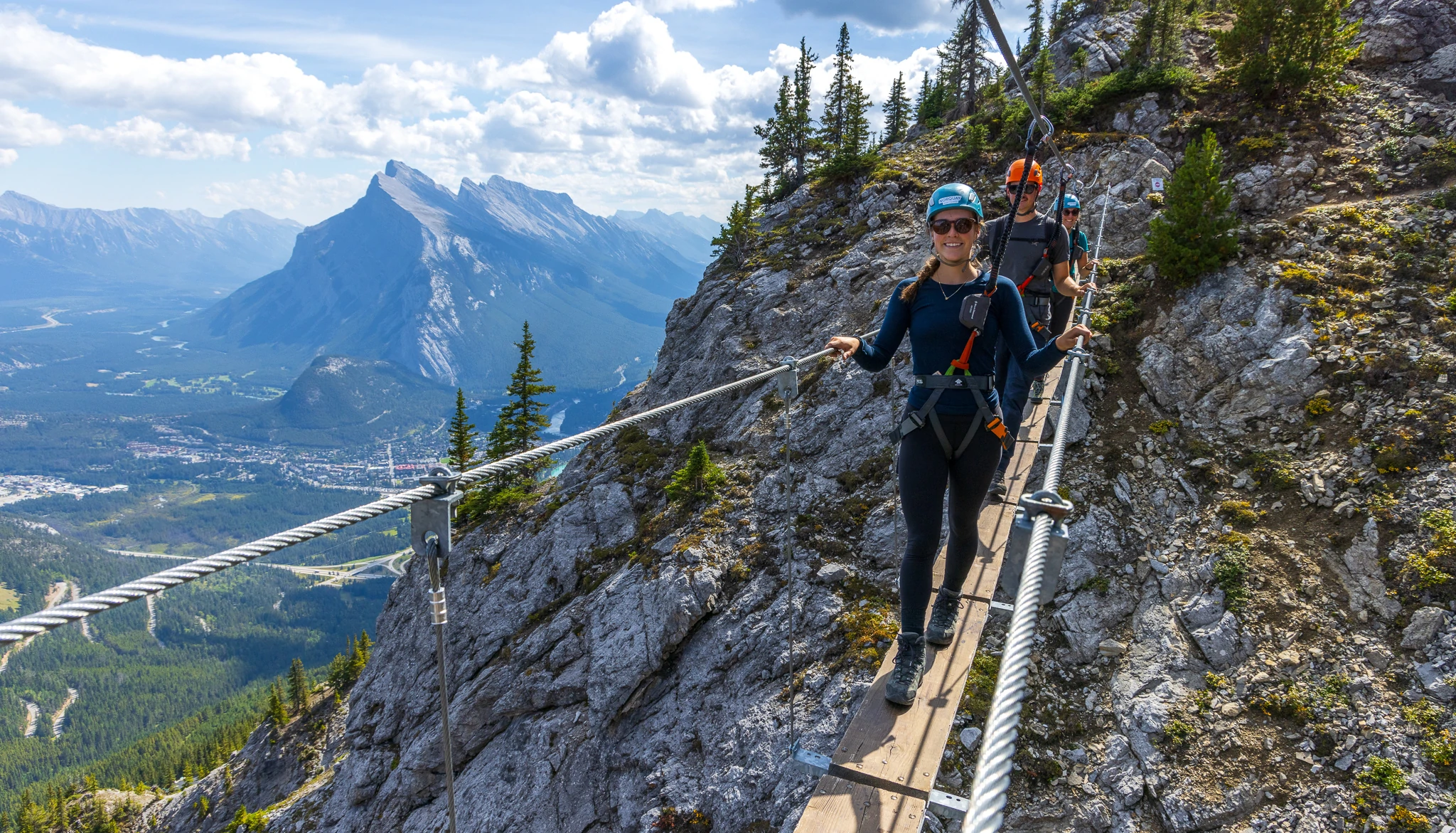
The cables on Mount Norquay's east ridge sit above a ski area, not below one — climbers ride the North American chairlift up before they climb, which surprises first-timers who expect a trailhead slog. That single logistical quirk shapes much of what appears in banff via ferrata reviews: the effort begins at altitude, with the Bow Valley already spread out below and Banff townsite visible as a grid of rooftops. What climbers describe most often is not difficulty but exposure. The rungs, or iron stemples, are bolted into limestone; the steel safety cable runs alongside them continuously, and the harness lanyards clip into it at every anchor. Accounts from nervous first-timers and confident hikers converge on the same point — the physical demand is moderate, the mental demand is personal. Several mention the suspension bridge as the moment their assumptions changed, in either direction. Feedback on the guides is the most uniform element across the record: climbers consistently credit them with pacing groups, coaching the clip-and-move rhythm, and reading weather over the Sundance Range before it arrives. Context matters when reading any Mount Norquay via ferrata tour account. Routes vary in length and commitment, so a report describing a short morning outing and one describing a full traverse to the summit ridge are not comparing the same experience. Group composition matters too. Families with teenagers, corporate groups and solo travellers all leave feedback, and their thresholds differ. Season is the third variable: the Canadian Rockies deliver larch gold in late September and afternoon thunderstorms in July, and the same route reads differently under each. Anyone scanning Banff climbing experiences should check which route, which month and which group size an account refers to before weighing it. Used carefully, banff via ferrata reviews are most valuable for calibrating expectations rather than choosing. They tell a reader that vertigo is common and manageable, that the guides handle the technical burden, that rain gear gets used, and that mornings tend to be steadier than afternoons. They do not tell a reader which route suits their fitness — that question is better answered against the route descriptions and the operator's own guidance. Anyone still deciding can call Norquay at +1-403-762-4421 or check banffnorquay.com directly. The address for arrival is 2 Mount Norquay Road, Banff, and the recommended arrival window is 08:30–10:00.
“The physical demand is moderate; the mental demand is personal.”
The best arrival window for the Banff Via Ferrata is 08:30–10:00 to minimize crowd exposure and capitalize on stable morning mountain weather. Reviewers consistently recommend this early start to ensure a more solitary climbing experience before afternoon convection patterns develop.
Warm days with variable mountain temperatures
Cooler, crisp air, stable conditions
—
Verdict: For the highest probability of calm weather and lower climber density, aim for weekday mornings during the shoulder months of September or early October.
Climber feedback points to the same handful of preparation steps that separate a smooth day on the cables from a scramble at the base station.
The Via Ferrata at Mount Norquay operates daily to accommodate climbers reviewing the routes.
Admission to the Mount Norquay resort area is free of charge. Participation in Via Ferrata climbing activities requires a paid tour booking.
Verdict: While resort entry is 0 CAD, visitors must pay for specific Via Ferrata tour packages based on the chosen route.
Everything you need to know about banff via ferrata reviews
Most banff via ferrata reviews highlight the satisfaction of navigating exposed limestone ridges with the assistance of professional guides. Climbers frequently note that the perspective of the Canadian Rockies from the summit is a primary reason for high ratings.
The majority of feedback emphasizes that the iron rungs and cable system feel secure throughout the ascent. Guests often mention in their banff via ferrata reviews that guides provide thorough instruction on using harness carabiners to maintain safety protocols.
Climbers commonly state that a moderate level of physical fitness is required to comfortably complete the routes. It is recommended to read specific banff via ferrata reviews to gauge which route difficulty aligns with your personal stamina and comfort with heights.
Many visitors report that the activity is approachable for novices, provided they are comfortable with climbing in an alpine environment. Guides cater to various skill levels, ensuring that those new to this type of mountain traverse feel supported during the excursion.
When scanning banff via ferrata reviews, check for comments on gear quality and group size to ensure a smooth excursion. Paying attention to feedback about weather preparedness will help you arrive ready for potential changes in high-altitude conditions.
Reviewers consistently suggest arriving early to avoid the afternoon buildup on the mountain trails. Many recent reports indicate that the morning window provides the best light and temperature for enjoying the panoramic vista.